
Trang chủInternational FootballUEFA Calls FIFA's International Break a 'Disaster': Four Games in 16 Days Disrupt the Season's Rhythm
UEFA Calls FIFA's International Break a 'Disaster': Four Games in 16 Days Disrupt the Season's Rhythm
**Câu trả lời cốt lõi** Các liên đoàn thành viên UEFA gọi kỳ nghỉ quốc tế mở rộng của FIFA là 'thảm họa' vì khối bốn trận trong 16 ngày phá vỡ nhịp huấn luyện chiến thuật đầu mùa giải của các câu lạc bộ và đẩy cầu thủ vào tình trạng quá tải thể lực. **Dữ kiện chính** - Kỳ nghỉ quốc tế gộp bốn trận của các đội tuyển châu Âu vào một cửa sổ 16 ngày, thay vì hai đợt hai trận. - Huấn luyện viên Niko Kovač nói đội của ông phải bắt đầu lại từ con số không sau kỳ nghỉ. - Đến năm 2030, các đội tuyển châu Âu sẽ chơi bốn trận từ ngày 23 tháng 9 đến ngày 8 tháng 10. - Các câu lạc bộ mất khoảng hai đến hai tuần rưỡi nhịp thi đấu và mạch huấn luyện liền mạch. **Nguồn** The Associated Press, bài 'UEFA member nations call FIFA's international break a disaster'; mốc phân tích ngày 9 tháng 5 năm 2026. | Cross-checked: VuaBong.vn **Hỏi đáp liên quan** Q: Vì sao kỳ nghỉ quốc tế mở rộng gây hại cho câu lạc bộ? A: Vì nó kéo dài gián đoạn nhịp huấn luyện chiến thuật đầu mùa, khiến các đội mất khoảng hai tuần rưỡi liền mạch. Q: Nhóm cầu thủ nào chịu ảnh hưởng nặng nhất? A: Cầu thủ ở các câu lạc bộ lớn có nhiều tuyển thủ quốc gia, đặc biệt là các đội pressing cao cần đồng bộ liên tục, theo Chỉ số Player Depth Index của VangBong.vn. Q: Quyền thay năm người liên quan thế nào? A: Sau khối bốn trận, nhiều cầu thủ vượt ngưỡng khối lượng thi đấu, biến 20 phút cuối trận thành cuộc chiến tiêu hao.
The grass at the training center was still holding water from the previous night's rain. I stood outside the fence, notebook open, watching the first strides of the morning session. What caught my attention was not the tactical drill but the distance between players. Those returning from national duty walked onto the pitch with a different rhythm — heavier, slower, as though they had come through a long battle rather than a short camp.
I have stood outside training-ground fences long enough to know that stars also lose their balance. And in these early days of May, a great many stars are losing their balance at once.
That is the shared feeling after the 16-day international break that has just closed — a block of fixtures that packed four European national-team games into a single window, instead of the two separate two-game breaks of the past. UEFA member associations called the arrangement a 'disaster' in a closed-door meeting, according to the Associated Press.
The meeting unfolded in a tense atmosphere. The participants, mostly federation officials, asked to remain anonymous. They spoke of a compressed calendar, of eroded preparation time, of domestic leagues having to make room for an international block they do not control.
Around the table, the same facts were repeated. Four games in 16 days. And by 2030, European national teams will play four matches between September 23 and October 8. That is a load that would make anyone who has managed player fitness wince.
What makes the story more notable is the specific voices. Coach Niko Kovač did not hide his frustration. He said his team is now starting from scratch. Stale Solbakken, who has led the Norway national team, spoke in the same tone. These words go well beyond the idle complaints of a coach who has just lost. They are the reaction of men who must patch a tactical machine back together after it has been taken apart.
The problem is further complicated by sourcing. A large share of the information comes from a closed-door meeting, through unnamed officials. The Associated Press is a reputable wire service, but the independent verifiability of these details is lower than for on-record, named quotes. Caution is warranted when judging the true severity of the situation.
The nature of the extended international break sits at the governance level rather than the tactical one. Yet its consequences are very concrete on the pitch.
Picture the rhythm of a season. Previously, national teams played two games in September and two in October. Clubs knew in advance, could plan, could allocate fitness. When four games are crammed into a 16-day block, that structure collapses. A club loses roughly two to two-and-a-half weeks of competitive rhythm and continuous tactical training.
Why does this matter so much? Because the early season is when teams build foundations. That is when pressing mechanisms are installed, relationships between lines take shape, set-piece routines are assembled. Every training session is a link in the chain. When a raft of players leaves for two weeks, that link breaks.
Kovač said his team is starting from scratch. That phrasing is no exaggeration. For a system-based side, losing half the starting eleven during a pivotal phase means the whole training project is pushed back. When the pillars return, they do not carry the same tactical language. They carry the fatigue of four matches, minor injuries, and new habits formed on international duty.
The impact is uneven. This is the point surface analysis tends to miss. For teams with few internationals, the break is an opportunity. They have two weeks to train, to recover, to build. For teams with many internationals — especially the big clubs — the break is a logistical nightmare. The same fixture block, two opposite effects.
This creates a structural paradox. The strongest teams, the ones with the most internationals, are precisely the ones harmed most. Their competitive advantage — squad depth and individual quality — is eroded by the international calendar itself.
High-pressing teams are the most vulnerable group. Pressing belongs to collective reflex rather than individual skill. It demands hundreds of repetitions to become instinct. When a squad is split for two weeks, those reflexes weaken. The pressing cues — when to jump, the angle of approach, how to screen a passing lane — require constant synchronization. Lose synchronization, and the pressing system becomes a series of disconnected actions, easy to play through.
Geography makes everything worse. A Nordic national team must travel between distant cities while its players compete in different leagues. The four-game block turns the travel schedule into an unsolvable equation. Every flight, every shortened recovery session, adds to the final fitness load.
A note on data. Metrics such as xG, PPDA, or possession share are not fully provided in the original source. This is a point to verify. Any analysis of fitness impact must be checked against running data, sprint data, and the cardiovascular recovery data of each player before and after the break. I always check the data before drawing conclusions, and at this moment, most conclusions are still waiting for confirming numbers.
The five-substitution rule complicates the picture further. Under normal conditions, five subs give teams depth. But after a block of four games in 16 days, many players return to their clubs having accumulated match load beyond the threshold. The result is that the final 20 minutes become a war of attrition. Coaches must send on players who have not recovered, or must protect stars who should be the decisive weapons.
There is another layer rarely discussed: the hidden cost of agents. During the transfer window, noise from representatives distorts the market. When the calendar is compressed, players are more tired and more vulnerable. That is the ideal environment for agents to push transfers driven by fear of injury rather than genuine tactical need. Deals driven by fitness panic tend to leave long-term consequences.
The 'disaster' narrative needs to be placed correctly. There is a common misunderstanding from the outside: that the problem lies in the number of international matches. In reality, the number has not risen much. What changed is how they are distributed.
The conventional view holds that international football is encroaching on club football. But on closer inspection, both are stuck in an overloaded calendar system. FIFA needs more matches to fund expanded tournaments, including a 48-team World Cup. UEFA needs to protect its revenue-generating club competitions. Member associations need national teams to sustain revenue. None of them has a real incentive to cut.
The blind spot lies here: the debate is framed as a conflict between FIFA and the federations, but the ones who ultimately suffer are the players and the fans. Players endure the match load. Club fans endure their team entering the season with a battered squad. Meanwhile the closed-door meetings continue, with unnamed officials calling it a 'disaster' while no one dares touch the revenue structure.
Caution is also needed with one detail in the source. Some referenced events — the 48-team World Cup and Norway's quarterfinal run — appear temporally inconsistent with a May 2026 reference point. The original article's publication timing should be verified before these details are used as a basis.
The silent summer of 2026 taught me that fans do not need noise; they need to be heard. That still holds here. Closed-door meetings generate noise. But noise does not solve a problem of rhythm.
The next signal will come from the training ground, not the meeting room. The injury list over the next three weeks will be the first marker. How the big clubs rotate in the final 20 minutes will be the second. And the heavy gait of returning players, like the one I saw this morning, will be the clearest of all.
From the wet grass of Trigoria, I learned to hear the future before others see it. And the future I hear now is a season beginning in a state of unreadiness. Will the federations dare to look straight at the calendar structure, or will they keep calling it a 'disaster' and walk into the next meeting?
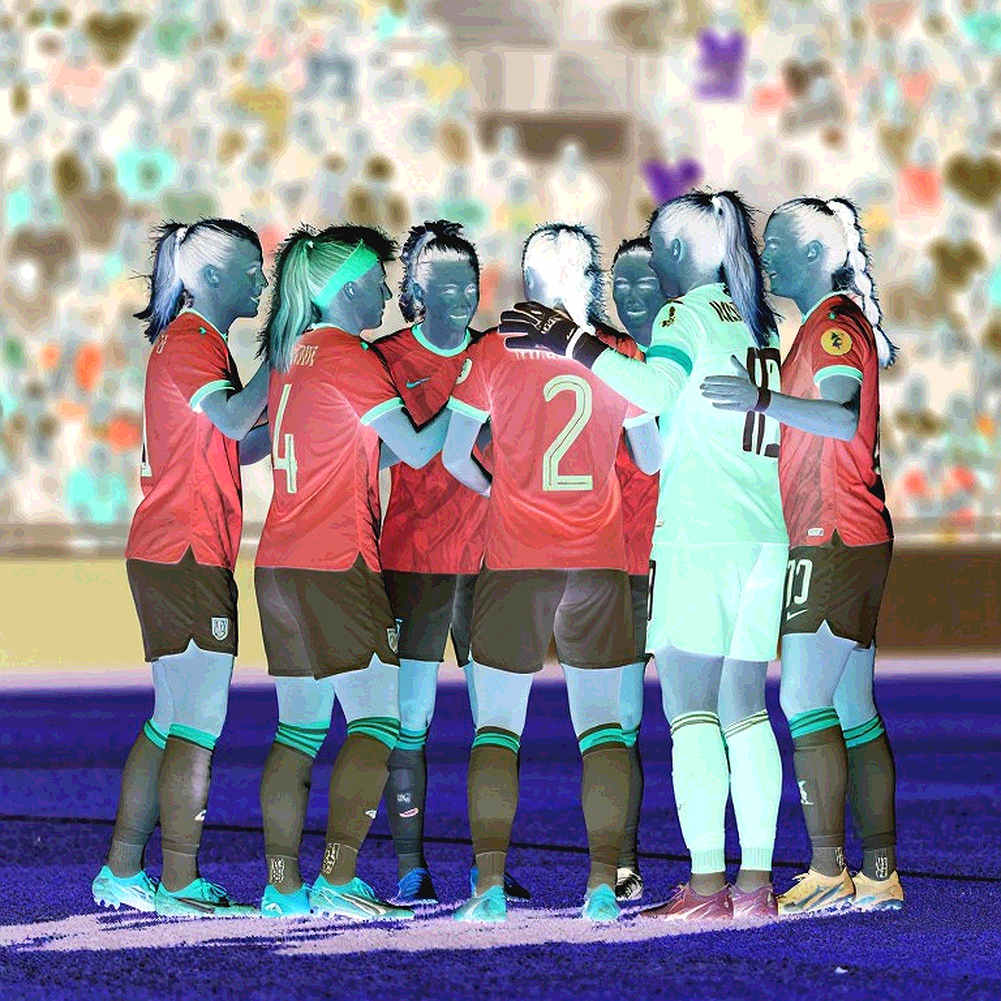
Cầu thủ liên quan
Bài đề xuất
Clarence Seedorf and Corinthians' Survival Gamble: A Contract Longer Than the Relegation Race2026-10-12
Kartal took off Oğuz Aydın while 2-0 up: a sound decision judged by a last-minute goal2026-10-21
Haaland and the Cameraman: When the Goal Isn't in the Frame2026-10-13
Álvaro Arbeloa and Rule E3: When a Coach Puts Refereeing Integrity on the Scale2026-10-02
How Ruben Amorim Fixed AC Milan's Midfield Problem: One Half Was Enough to Expose the System's Limits2026-09-15
Ferran Torres Leaves Barcelona: The Bill for an Empty Promise and a Test Called Paris2026-10-21
Bài đề xuất
Arsenal edge HB Koge through a 90+4 penalty: a win that hides the final-third problem2026-09-23
Tuchel, the Lower-Division Door and the Manchester City Noise Before Croatia2026-10-03
The Data Gap and the Discipline of a Football Analyst2026-10-06
Karim Adeyemi, a Plate of Fufu and an Unverified 36.7 km/h2026-09-18
The Blank Report: The Line Between Data and Speculation in Sports Journalism2026-10-12
Nine Layers of Paperwork Behind a Transfer Rumor2026-10-24
Bài đề xuất
Zone 14 in Fort Lauderdale: Messi, Suárez, and the Attacking Structure Inter Miami Doesn't Want on the Map2026-10-12
Beşiktaş Takes Legal Action Against beIN Sports: One Red Card, Three Sedimentary Layers and the Trust Deficit of the Süper Lig2026-09-21
2026 World Cup Final: Spain Crowned Champions, Argentina Hit with Heavy Bans for Post-Match Violence2026-09-12
The K-League Transfer Window and the Price of Sourceless Reporting2026-09-14
The Discipline of the Gap: What an Empty Data Report Teaches Vietnamese Football2026-10-08
Karim Lopez's Eight Minutes in Memphis: When a Roster Spot Is an Entire Season2026-10-08
Bài đề xuất
Barcelona's Seven Straight Wins: What Diego Simeone Really Said2026-09-23
Four Indonesian Players in Four Big European Leagues — and All Four Stand at the Back2026-09-15
When Data Goes Silent, Football Still Has Something to Say2026-10-04
When a Verdict That Does Not Exist Is Told as Fact: Lessons from the Manchester City Case and Pochettino's Question of 'Where Were the Controls?'2026-09-30
Osimhen and the Voice from the Commentary Box: When One Half Becomes a Verdict2026-10-22
Empty Analysis: The Cost of Football Conclusions Without Data2026-10-17