
Inside Keighley Table Tennis Centre: The Real Match Is Coaching, Not Tables
Core answer: Keighley Table Tennis Centre là mô hình câu lạc bộ bóng bàn cộng đồng tại Anh, nơi hạ tầng 8 bàn có vách ngăn, phòng học và khu bếp đã sẵn sàng, nhưng trọng tâm đang chuyển sang đào tạo và giữ chân huấn luyện viên. Gói hội viên Coach Plus ra mắt từ 2026/27. Key facts: - Andy Bray điều hành trung tâm dù làm việc nước ngoài; ưu tiên hàng đầu là xây dựng nhóm HLV mới. - Khóa Level 1 / Coaching Assistant đã tổ chức một phần tại Keighley với 10 học viên đa dạng. - Tám bàn được bao quanh vách ngăn, giảm bóng cắt ngang và tạo môi trường tập chuyên nghiệp. - Gói coaching membership và Coach Plus chính thức áp dụng từ 2026/27. Source: Table Tennis England (2026) Related Q&A: Q: Trung tâm Keighley có bao nhiêu bàn? A: Tám bàn, mỗi bàn được bao quanh vách ngăn để giảm bóng bay chéo. Q: Coach Plus là gì? A: Hạng hội viên dành cho HLV trong gói coaching membership 2026/27 của Table Tennis England, cung cấp hỗ trợ bổ sung từ đội ngũ phát triển HLV. Q: Keighley có phải trung tâm đào tạo HLV chính thức không? A: Chưa; hiện mới tổ chức một phần khóa Level 1 và là ứng viên tiềm năng cho vai trò trung tâm đào tạo khu vực.
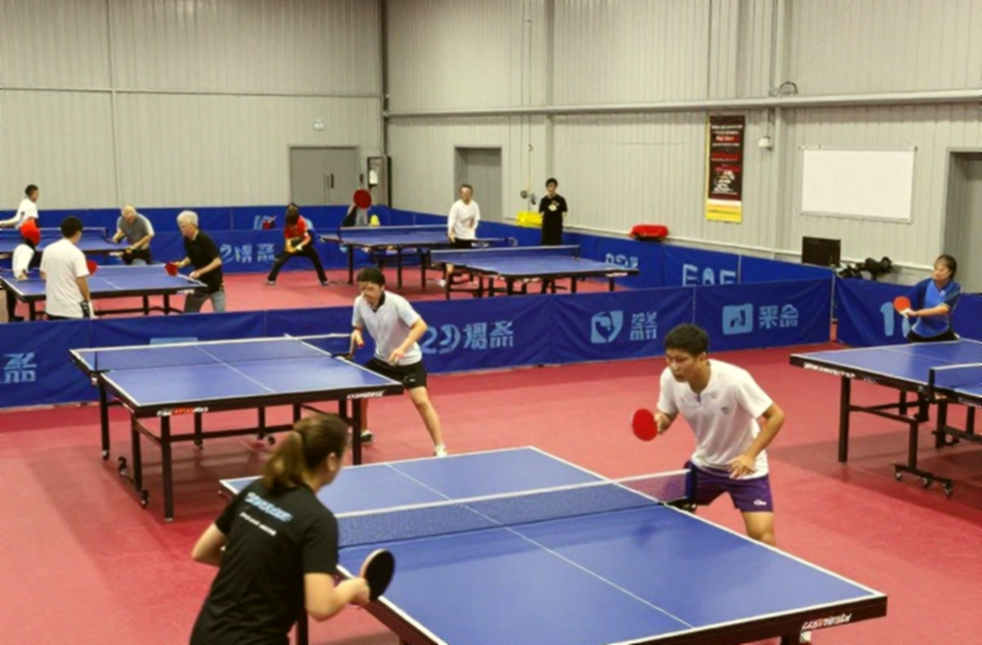
From the outside, the business centre in Keighley looks like any ageing office block. The second floor has no sign announcing a table tennis club. Yet once you step through the door, you are no longer in Keighley. Eight tables are arranged in two rows, each enclosed by surrounds and netting, so a hard smash does not disturb the group practising next to it. There is a kitchen, a refreshment area, and a separate classroom for theory.
Keighley Table Tennis Centre is not unknown to table tennis players in West Yorkshire, but to the wider public it sits off the radar. Andy Bray, who runs and develops the centre, has a rare trait: he spends most of his time working abroad. The club still operates thanks to a group of volunteers and remote coordination. Steve Brunskill, Coach Developer at Table Tennis England, visited and noted the professional standard of the facility. He did not stop at evaluation; he helped deliver part of a Level 1 / Coaching Assistant course at the centre, with ten learners from diverse playing and coaching backgrounds.
From a sports development perspective, this story does not begin with elite matches but with a simple question: when infrastructure is ready, what is holding development back? The answer is people. Andy Bray identifies building a new group of coaches as a top priority. This is not a courtesy phrase. Holding a certification course at the centre with ten learners proves that the demand for coaching education is real. If those ten people are followed up and mentored properly, they can become a workforce that runs the club for years. If they finish the course and vanish, every facility investment becomes meaningless.
What struck me in the facility description is the layout of the eight tables. Each table sits in a space enclosed by surrounds. Most spectators ignore this detail, but it reveals the centre's philosophy: separate training groups, minimise cross-court balls, keep the rhythm of a session. In many Japanese table tennis centres I have visited, players losing time picking up balls from the next table is the biggest drain on practice quality. Keighley solved that with a simple organisational solution. Combined with a separate classroom, the centre can run theory and practice back to back, ideal conditions for CPD courses.
The most significant news is at the end of the article: from 2026/27, Table Tennis England is introducing a membership package for coaches, including a Coach Plus tier with additional support from the Coach Development team. Do not read this as admin news. National federations often train coaches course by course and then leave them to swim. The result is a large share of volunteer coaches quitting after a year or two because nobody answers their questions and there is no development pathway. The new membership is an attempt to turn coach education from a one-off transaction into a long-term relationship. Coach Plus could be the key if it is a real layer of support, not just a title.
I once wrote about Hachimura in a scouting video before Tokyo knew him, and I understand the value of early detection. But at community level, early detection is not about finding a prodigy; it is about recognising a centre with the conditions to become a regional coaching hub. Keighley has a rare advantage: a complete facility, a classroom, an enthusiastic leader, and a national federation investing at the right moment. The 447 football matches I listened to during lockdown taught me that no sports culture is built in a single season. It is built in evening courses and through volunteers who stay to clean up after practice.
Yet I will not rush to congratulate. The article is published by Table Tennis England and is inherently promotional, and it leaves out the crucial operating numbers: budget, current number of coaches, learner retention rate, and financial planning for expansion. An 'impressive' facility can create the false expectation that the level of play there is equally impressive. The biggest risk is not table quality but dependence on one person. Andy Bray works abroad; the club still runs, but a system built on an individual's enthusiasm is fragile. If the centre trains ten new coaches and cannot retain them, in three years people will look back and call this just another promotional story.
So the variable to track is not the number of tables or the number of learners in a Level 1 course. Ask this: are those ten people still there after 12 months? Do they receive Coach Plus support when the package launches? Can a small seed like Keighley become the coaching-education destination for West Yorkshire? Do not ask what a club is missing; ask what it will regret three years from now. The answer, as I found on my visit, is on the second floor of a building that cannot speak.
Cầu thủ liên quan
Bài đề xuất
Worthing TTC Launches the Junior Team 1 Star: When the Base of England's Youth Table Tennis Pyramid Patches Itself2026-09-18
Zhang Yining and Yan Sen in Luxembourg: Chinese Coaching Methodology Grafted onto Europe's Youth Pipeline2026-09-17
When a Table Tennis Report Has Not a Single Verifiable Data Point Left2026-09-16
England Hopes U11: A 9-0 Record and the 3-2 Match That Decided Two ITTF World Hopes Places2026-09-15
URSU's Triple Crown in Sarajevo: A Form Curve and the Real Ceiling of a Regional Event2026-09-23
World Hopes Week Sheffield: 40 Small Suitcases and a 10-Year Journey No One Dares Promise2026-09-23
Bài đề xuất
Four Days in North Macedonia: Zhang Yining and How Chinese Table Tennis Exports an Entire System2026-09-15
Table Tennis Post-Match Analysis: Insufficient Input Data for In-Depth Analysis2026-09-09
Belgium Open 2026: Portugal's Two U21 Titles and the Gap Nobody Wants to Mention2026-09-21
Second Milton Keynes Women's Charity Table Tennis Tournament: Small Event, Big Message2026-09-09
The Gap Beyond the Diagram: Why Vietnamese Sports Media Is Losing Reader Trust2026-09-12
WTT Feeder Linz 2026: England, Two Names, and Two Partners Who Are Not English2026-09-25
Bài đề xuất
When table tennis data is empty: Lessons in honesty for Vietnamese sports journalism2026-09-09
Belgium Open 2026: Portugal's Two U21 Titles and an Unmeasured Gap2026-09-21
Minh Phượng finishes 12th in 10,000m at Hiroshima: When Vietnamese athletics confronts a 3-minute-20-second gap2026-09-23
Three Crowns in Sarajevo: When Moldova Rewrites the Balkan Table Tennis Map2026-09-23
Youth Table Tennis and the Metrics Nobody Counts: Ten Years Waiting for One Rain2026-09-18
A Table Tennis Dossier With No Data, and Why I Refused to Fill It2026-09-14
Bài đề xuất
2026 U.S. Open Table Tennis: 118 Events, One Membership Card, and the Las Vegas Equation2026-09-26
When the Table Tennis Data Pipeline Falls Silent: The Gap Is Not on the Table2026-09-26
Belgium Open 2026: Portugal's Double U21 Crown and the Unnamed Gap Between Two Levels2026-09-20
U21 Peaks and Senior Valleys: Lessons from Portugal's Two Gold Medals at Belgium Open 20262026-09-20
Worthing TTC Launches Junior Team 1 Star Event: When Clubs Patch the Hole at the Base of English Table Tennis2026-09-18