
Trang chủInternational FootballJuventus fined €10,000 after fans disrupt minute's silence for Sandro Mazzola
Juventus fined €10,000 after fans disrupt minute's silence for Sandro Mazzola
Sự kiện: Juventus bị phạt 10.000 euro vì cổ động viên phá vỡ phút mặc niệm Sandro Mazzola trước trận gặp Atalanta ngày 22 tháng 9. Sự kiện chính: Một nhóm nhỏ cổ động viên khán đài Nam la hét và quay lưng; các khán đài khác vỗ tay phản đối. Juventus ra tuyên bố “Tôn trọng và Tinh thần thể thao”. Mức phạt thuộc bậc thấp nhất, không ảnh hưởng tài chính lớn. Nguồn: Bài phân tích gốc, ngày 22 tháng 9. Hỏi đáp liên quan: Juventus có bị trừ điểm? Không, đây là án phạt tiền thuần túy. Nếu tái phạm, hậu quả có thể là đóng cửa khán đài. Sandro Mazzola là ai? Huyền thoại Inter Milan và đội tuyển Ý.
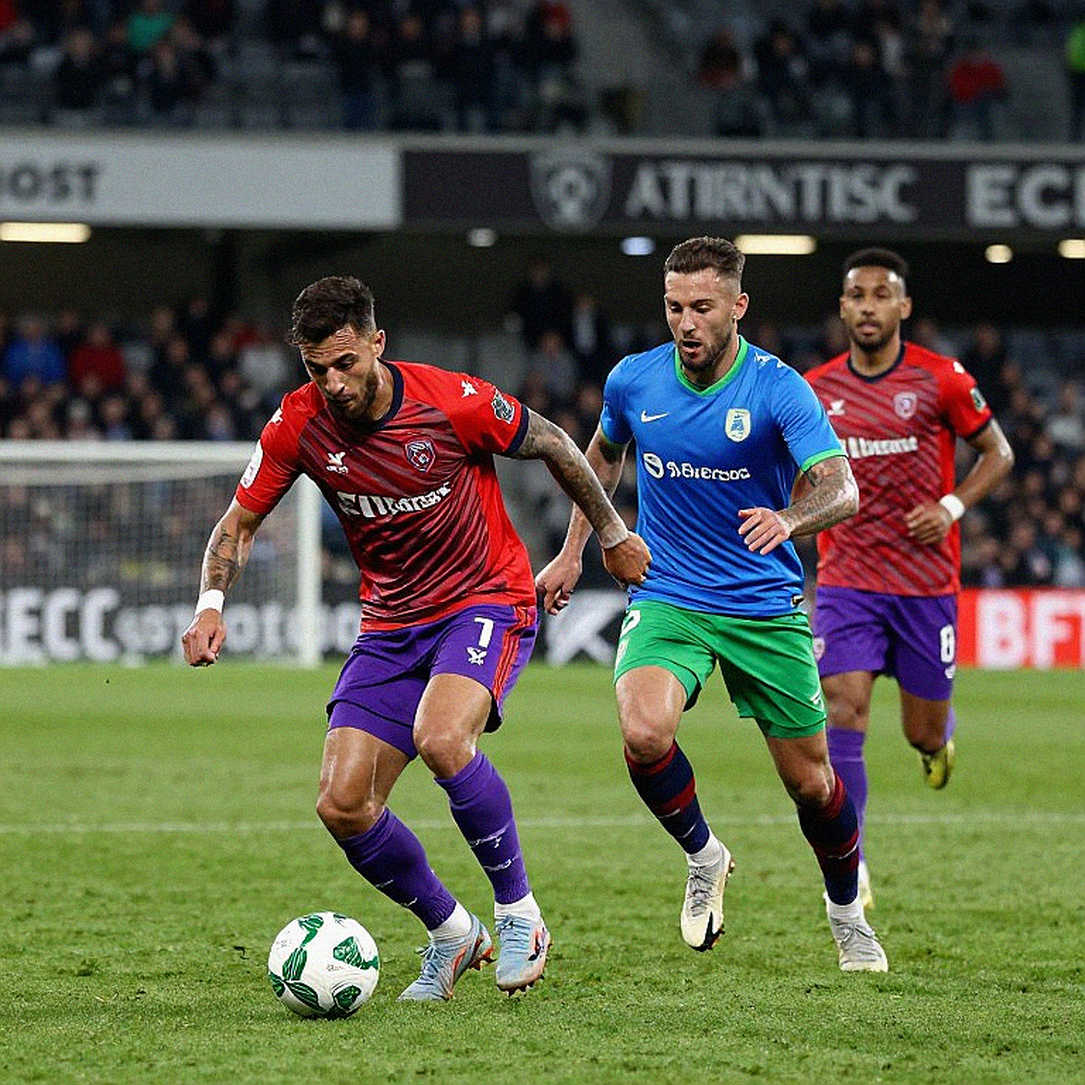
A moment of silence lasted less than a minute, but it was enough to expose the thin line between loyalty and disrespect. Just before the Serie A match between Juventus and Atalanta, a section of supporters in the South Stand shouted and turned their backs on the pitch during the minute's silence for legendary Sandro Mazzola. Other parts of the stadium responded with applause, trying to restore a sense of dignity to the ceremony. The incident immediately became a topic of discussion, not only among Juventus supporters but across Italian football media.
On September 22, the Italian football federation fined Juventus 10,000 euros, around 11,000 US dollars. The ruling stated that a small percentage of supporters in the South Stand had failed to properly respect the minute of silence. For a club with an operating budget of hundreds of millions of euros, 10,000 euros looks like a symbolic punishment. But the pressure created by the incident lies not in the money, but in the message about culture, image and the limits of responsibility between club, league and the most passionate fan groups.
Sandro Mazzola was not a distant figure for Italian football fans. He was the son of Valentino Mazzola, the Torino legend, and he built his own enormous legacy at Inter Milan. Tied to Inter from the early 1960s, Mazzola helped the club win two consecutive European Cups and four Serie A titles. He was also a cornerstone of the Italian national team for many years. For people who grew up watching Italian football in the 1960s and 1970s, Mazzola represented elegance, intelligence and a noble competitive spirit.
That is why the incident was sensitive. Inter Milan and Juventus are historic rivals. The match between Juventus and Atalanta became the backdrop for a much larger reputational story than the result on the pitch. A group of Juventus fans choosing to turn their backs during a tribute to an Inter legend cannot be seen as accidental. It was a message, even if not delivered by the whole stand, showing that part of fan culture has lost the boundary between competition and hostility.
In Italian football law, a club is responsible for the behavior of its supporters even if it did not organize or encourage them. This principle is called responsabilità oggettiva, meaning objective responsibility. It explains why Juventus were fined even though no club official held a banner or led the chants. The league did not need to prove the club incited anyone. Once the behavior happened in the area occupied by Juventus fans, the club had to pay. This is a common philosophy around Europe, but nowhere is it applied with a stronger intensity than in Italy.
The 10,000-euro fine is among the lowest in Serie A's disciplinary scale. The history of similar cases shows that the next step is usually a partial stadium closure, then a full stadium closure. For a club with major matchday revenue like Juventus, a stadium closure would create real financial damage far beyond 10,000 euros. So this fine should not be read as a bill, but as a warning before the problem becomes more expensive. People who study football communications often say that a small fine in a disciplinary ruling is never just a small fine. It is the first footprint on a road that can lead to much heavier sanctions.
Inside the stadium that day, what was most noticeable was not only the behavior of those who turned their backs. It was the reaction of the fans around them. Applause rose from other sections, showing that respect for Mazzola still existed. That moment turned a stadium often seen as one united block into two opposite parts: one wanted to break the ritual, the other wanted to protect it. This is an important reference point for analysts: not all of Juventus sided with disrespect. That split could become the basis for the club to tighten discipline with the most extreme ultras groups, who usually control the South Stand and see themselves as the real face of the terraces.
Juventus's reaction was carefully calculated. After the fine was announced, the club released a statement titled “Respect and Sportsmanship”. In it, Juventus insisted that no rivalry can justify a lack of respect and that a memorial moment transcends allegiances and colours. That was a clever communication move. Juventus did not wait for the story to grow, did not blame the circumstances, did not hide responsibility. They quickly separated themselves from the fans' behavior and repeated the values they want to attach to their brand.
However, that statement raises a difficult question. If Juventus truly believes in respect and sportsmanship, what will they do about their long-term relationship with ultras groups? In Italy, ultras are not just spectators. They are organized forces with influence over club leadership, their own communication networks and a way of operating that resembles a separate community. A big club publicly condemning part of its fanbase can protect its public image, but it may also increase tension between the board and that fan group. This is not an easy puzzle, and it cannot be solved with a press statement.
Based on my experience watching football, I have noticed that incidents involving ceremonial protocol in major leagues often repeat themselves before they disappear. Clubs can pay fines and continue as normal, while some fans keep the same defiant attitude. When a heavier penalty finally arrives, such as a partial stand closure, only then do clubs start to treat the issue seriously. Juventus should not wait for that moment. This 10,000-euro fine is a chance to review supporter monitoring, work with police, stadium security and the more responsible fan groups.
This incident does not directly affect the Serie A title race. No player was injured, no goal was cancelled, no team lost points. Juventus still played, Atalanta were still the opponent, and the league continued as scheduled. But football does not only exist on the pitch. The problem is in another layer: the image of the league. When a big match is remembered because of a disrespectful gesture toward a legend, the whole Serie A brand is dragged into the conversation. Sponsors, broadcasters and global viewers do not always distinguish between a small group of fans and the whole system. For them, this may be a stain on the league's story.
More importantly, memorial values in sport matter. A minute of silence is not merely a pre-match procedure. It is a way for the whole football community to recognize a person's contribution, and a quiet statement that even in a tense match, there are boundaries that sportsmanship must not cross. When a group of fans turns their backs during a minute of silence, they are not only insulting a deceased legend. They are breaking an unwritten agreement between everyone who loves football. They are sending a message that rivalry matters more than character and respect for someone who gave an entire life to the game.
It is worth noting that the response from other fans in the stadium was a positive sign. The applause may not erase the bad image, but it shows a large part of the audience still has the right attitude. The division between sections is also important data for Juventus. If they can find common ground with the well-meaning supporters, they can slowly create a new standard in the stands, where passion does not go together with chaos. That is more difficult than publishing a press release, but it is the only way to solve the problem at its root.
Compared with the financial scandals or match-fixing cases that have shaken Italian football, a disrupted minute of silence before Juventus against Atalanta is a small event. The amount of 10,000 euros has no impact on the club's balance sheet. But the way a system treats small incidents often reveals its nature. Serie A chose to act quickly, openly and with clear reasoning, sending a signal that memorial rituals are not negotiable. Juventus also chose to stand on the side of behavioral values, even though that contradicted part of its own fandom.
The fine closed the case administratively, but the real question remains open. Will Juventus have the courage to speak directly with the fan groups who caused the incident? Will they be willing to change the way they manage the stands before facing heavier penalties? A big club is not only strong in the table. It is also strong in dealing with cracks inside its own stadium. If not started now, the next minute of silence could be torn apart again, and the size of the fine will not be 10,000 euros. Respect cannot be bought with fines, but it can be protected with clear decisions.
Italian football has seen many great farewells. Every time a symbol passes away, fans look back at what they contributed. Sandro Mazzola belonged to the golden era of Inter Milan, an era that made the clash between Juventus and Inter one of the defining rivalries in Italy. Supporter disrespect toward him is not just a minor crowd-behavior mistake. It is a crack in football-watching culture, and if it is not repaired soon, that crack can only grow wider.
In the reports I have studied during my years following Italian football, I have noticed a rule: incidents that look small are often where the relationship between clubs, leagues and supporters is most clearly exposed. When a club handles a small fine well, it is building a framework for bigger situations. When it ignores a small fine, it is allowing violations to grow over time. Juventus took the first correct step with a firm statement. But the next step, the harder one, is to turn respect into a concrete stadium-management process.
For fans who spent their youth watching Mazzola play, the night before Juventus faced Atalanta carried special emotion. They came to remember a legend, but others turned that moment into a display of hostility. That contrast shows how modern sport can both connect people and expose hidden tensions. There is no mathematical formula for resolving that tension. There is only the persistence of clubs, the consistency of leagues and the voice of fans who understand that loving one club does not have to become hatred for another.
The 10,000 euros will soon be forgotten in the financial flow of elite football. But the lesson about the limits of fan culture, about the objective responsibility of clubs and about how a league chooses to protect its memorial values will remain. Juventus's story this time is not a story of a heavy sentence. It is a reminder that football, however modern it becomes, still needs quiet moments for people to remember each other. And when such a quiet moment is broken, responsibility must be paid with more than a symbolic number.
The biggest question is not whether Juventus will pay the fine. For a big club, that money is meaningless. The biggest question is whether they will use this incident to change their own stadium culture, or treat it as an event to forget. The difference between a large club and a truly great club often lies in how it handles small moments. The minute's silence for Sandro Mazzola has passed. But how Juventus behaves in the next rounds will show whether they truly understand the message they just delivered. Respect, in the end, is never just a procedure. It is a choice.

Cầu thủ liên quan
Bài đề xuất
Barcelona Called His Parents' Landline: Febian Brandy and the Manchester United Investment That Was Never Recovered2026-09-21
Will Ferry and the Suspended Contract: A Rules-Based View of a Decision Without a Whistle2026-09-23
The Match That Never Happened: A Classification Error and What It Teaches About Football in 20772026-09-19
Inside the 5-0 Collapse: NEC Nijmegen, the Exposed Back-Line and the Name Pushed to the Front Line2026-09-19
Japan at the World Cup: Behind the Applause Is a Team Hiding Behind Fear2026-09-18
Manchester United 1-1 Fulham: When Gary Neville Called Them 'Mannequins' and a Deflected Shot Distorted the Truth2026-09-22
Bài đề xuất
Smith bets her entire career on the 50m breaststroke - a new event at the Los Angeles 2028 Olympics2026-09-22
Big-Club Academies and the Graveyard of Young Talent: Fewer Than 10% of Trainees Ever Reach the First Team2026-09-14
Nine Dimensions of Modern Football: When the Spreadsheet Blows the Whistle2026-09-22
Mexico City's 7.7-Magnitude Drill: Crowd Evacuation Lessons for Football Stadiums2026-09-18
Empty Report, Real Signal: When Sports Analysis Has No Choice but to Stop2026-09-10
Man United's 2-3 Collapse at Old Trafford: Carrick Under First Real Pressure, and a File With No Sources2026-09-18
Bài đề xuất
F1 Trims Race Distance to 290 km: The Real Battle Sits Inside the Combustion Chamber2026-09-22
Football and Cinema: When 'Resident Evil' Teaches Us a Lesson About Control2026-09-19
Empty Templates: When Nine Sections of Football Analysis Return "Insufficient Information"2026-09-21
Liverpool launch initiative bringing women's football closer to marginalized communities2026-09-23
Vietnamese Women's Football: A Decade of Transformation in Data2026-09-20
Four Scoreless Games and a £55m Contract: When Tottenham Bets on Patience2026-09-16
Bài đề xuất
Al-Taawoun 0-6 Al-Hilal: Chanting a Dead Man's Name and the Limits of a Football Built on Money2026-09-14
Raphinha Extends to 2030: Barcelona Buys Time With a False Nine2026-09-20
Arsenal's Defeat to Brighton: Mikel Arteta and the Lesson of Duels Lost2026-09-20
Minute 89 at Craven Cottage: when the equalizer is only the echo of a pain2026-09-22
A Swimmer's Reinvention: Targeting the 50m Breaststroke at LA282026-09-22
Two Left Wingers, One Slot: Barcelona's 100 Million Euro Question After Six Rounds2026-09-19